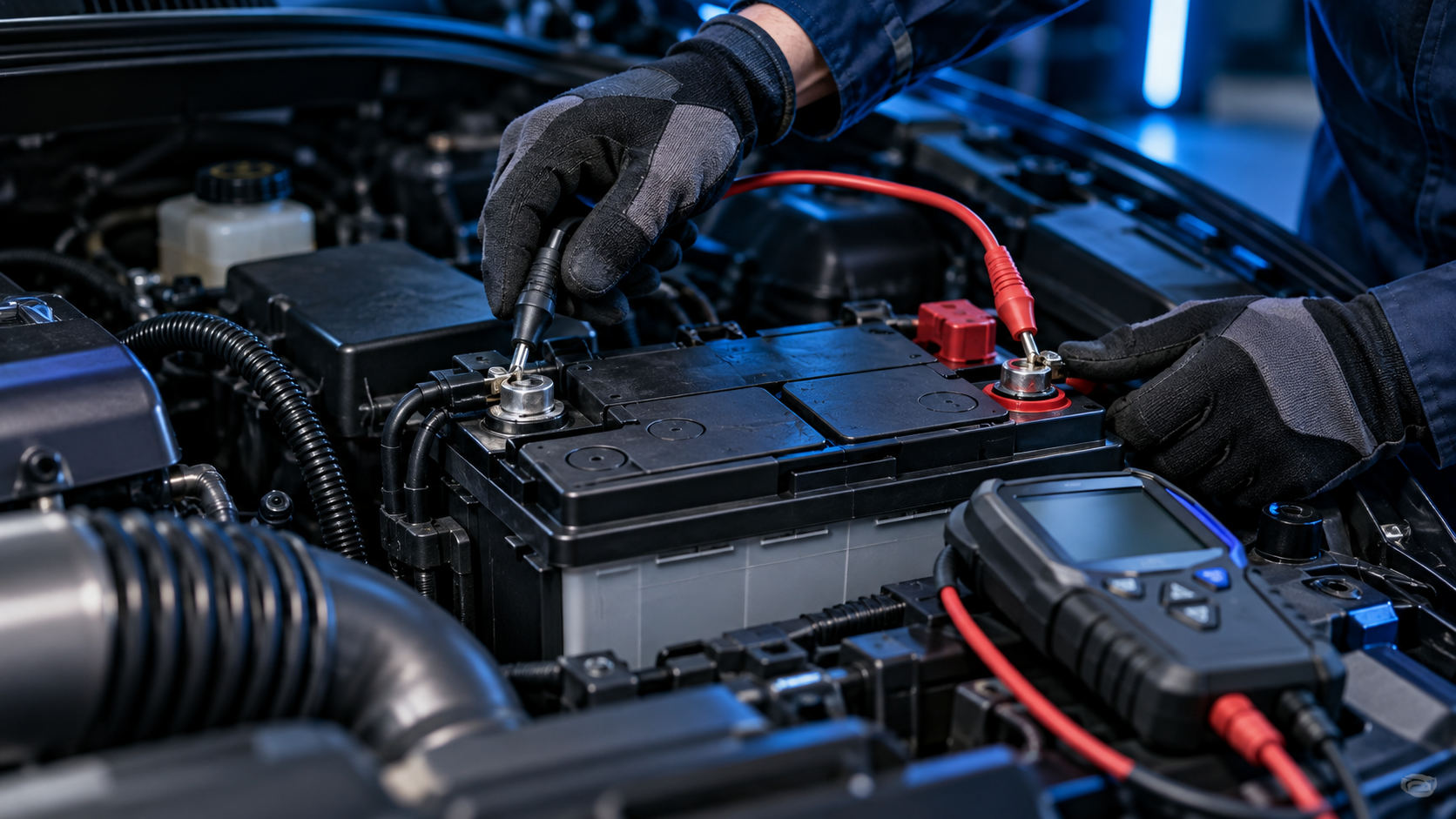
A weak 12-volt battery can leave a car unable to start, even when the engine and the rest of the vehicle are in good condition. Regular visual checks and a timely battery test can catch some problems early. Battery designs vary, and hybrid or electric vehicles may contain a separate high-voltage system that owners should not service.
Know which battery you are inspecting
Most gasoline cars use a 12-volt starter battery. Hybrids and battery-electric vehicles also have a 12-volt battery for accessories and control systems, alongside a high-voltage traction battery. The high-voltage pack has different safety requirements. Do not touch orange cables, open battery covers, probe connectors, or attempt repairs on a traction battery. Use the manufacturer’s manual and a technician trained for that vehicle.
Before opening the hood, check the manual for battery location and precautions. Some vehicles place the 12-volt battery in the trunk or under a seat; jump-start terminals may be elsewhere. If the battery is cracked, swollen, leaking, unusually hot, or gives off a strong sulfur-like odor, keep away and arrange professional help. Do not lean over it or try to charge it.
Inspect the case and connections
With the vehicle off and the key away from the car, look for a secure hold-down, damaged cables, a cracked case, or corrosion around the terminals. Corrosion can appear as a powdery deposit. A loose or corroded connection can interfere with starting, but disconnecting a battery can erase settings or trigger procedures on some vehicles. Follow the service instructions for your exact model before touching a terminal.
Do not pour water or household cleaner onto electrical connectors. If the terminals need cleaning, use the vehicle maker’s procedure or have a shop service them. Wear eye protection and gloves if the manual allows owner maintenance. Never bridge the positive and negative terminals with a tool, and keep metal jewelry and loose tools away from the battery. Lead-acid batteries contain corrosive acid and can release explosive gas while charging.
Watch for changes in starting
Slow cranking, repeated clicking, dim lights, unexplained electrical resets, or a need for jump-starts can indicate a weak battery. They can also point to a charging-system fault, a starter problem, or an electrical drain. A battery test measures condition; a technician can also test the alternator or DC-to-DC charging system and look for parasitic loads.
Battery life depends on climate, trip length, vehicle design, and use. Short trips may not replace the energy used to start the engine, while heat can accelerate battery wear. Rather than replacing a battery on a fixed universal schedule, ask for a test if starting changes or before a season when failure would be especially disruptive.
Use the correct replacement
When replacement is needed, match the size, terminal layout, chemistry, capacity, and starting rating specified for the vehicle. Some cars require an absorbent glass mat (AGM) battery or an enhanced flooded battery, and some need the replacement registered to the vehicle’s battery-management system. A similar-looking battery can still be unsuitable.
Ask the installer whether the vehicle needs coding, a memory-saving procedure, or battery registration. Keep the receipt and warranty details. Used lead-acid batteries should go to a proper recycling or collection point; do not put one in household waste.
Jump-start only when the manual allows it
Jump-starting instructions vary. Use the designated terminals and sequence in the manual, with a compatible booster or donor vehicle. Incorrect connections can damage electronics or cause sparks near battery gas. Never jump-start a battery that is frozen, leaking, swollen, or visibly damaged. If you are unsure which terminal to use, call roadside assistance.
After a jump, a vehicle may start but still have a failing battery or charging fault. Arrange a test rather than assuming a long drive has solved the problem. For hybrid and electric vehicles, follow the specific instructions for their 12-volt system and never use the traction battery or high-voltage cables as a DIY service point.
AAA’s battery warning guide describes common symptoms such as slow starts and repeated jump-starts. For broader care across powertrains, see the Department of Energy’s electric-vehicle maintenance guidance.
Leave a Reply