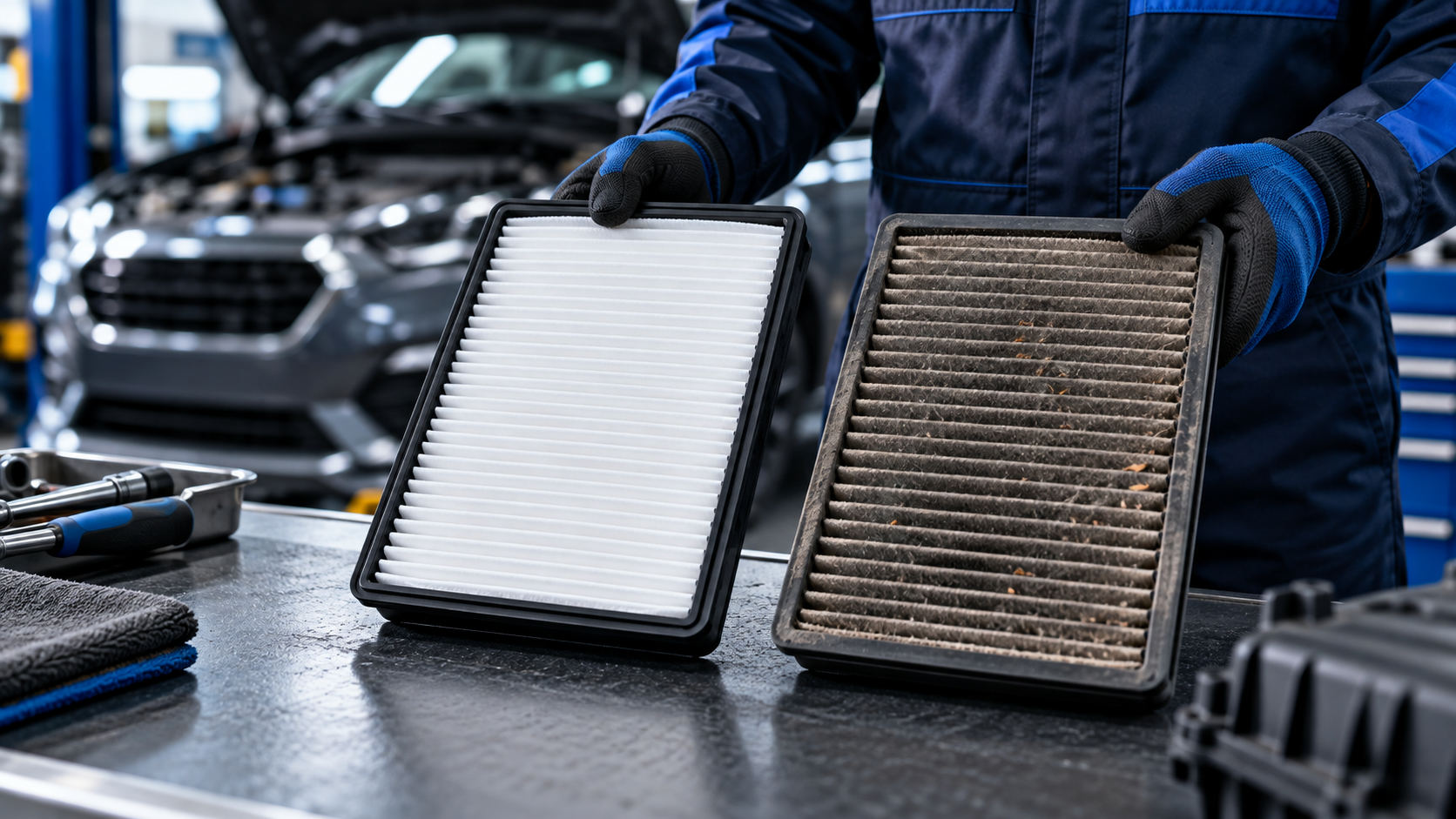
Many cars have two air filters with different jobs. The engine air filter keeps dust and debris out of the intake. The cabin filter reduces dust and pollen entering through the heating and ventilation system. Checking both is a modest maintenance task, but the interval and replacement procedure depend on the vehicle.
Know which filter you are looking at
The engine air filter is usually in a housing connected to the intake duct under the hood. A clogged or damaged filter can restrict airflow, while a filter that is seated incorrectly can let unfiltered air bypass it. The cabin filter is often behind the glove box, under the dashboard, or near the base of the windshield. Some cars have more than one cabin filter, and access may require removing trim or panels.
Use the manual to identify the correct part and location. Filter shapes can look similar while differing in size, sealing edge, or filtration material. Do not install a filter that bows, leaves a gap, or requires force. A poor seal can allow debris past the filter or make the cover difficult to close.
Follow the service schedule
Replacement timing varies by model and environment. Dusty roads, construction areas, wildfire smoke, heavy pollen, and frequent driving can shorten filter life. Some manuals list both a normal and severe-use interval. Check the schedule for the conditions that match your driving and use the vehicle maker’s interval as the baseline.
AAA’s maintenance guidance suggests inspecting engine and cabin filters during service, while noting that dusty conditions can change how soon they need replacement. A filter does not need to be changed solely because it looks gray. Modern media can hold fine particles that are difficult to judge visually. If the manual provides an inspection method or replacement interval, follow it.
Symptoms that justify a check
A reduced airflow from the vents, persistent musty odor, or a fan that seems less effective can prompt a cabin-filter inspection. These symptoms can also come from moisture, a blocked drain, or a ventilation-system fault. Replacing the filter may not fix the underlying cause. If odor remains after a correct filter change, have the system inspected.
An engine filter may need attention if the service interval has arrived or if it has been exposed to unusually dusty conditions. Poor performance can have many causes, so do not treat a dirty-looking filter as a diagnosis for a check-engine light or rough running. If the engine warning light is on, have the fault codes and vehicle systems checked.
Replace a filter without damaging its housing
Work with the vehicle switched off and cool. Photograph the old filter before removal so you can check its orientation. Note arrows marked AIR FLOW or UP and reinstall the replacement in the direction specified by the manufacturer. Remove loose leaves or dust from the empty housing with a clean, dry method that will not send debris into the intake. Do not use compressed air on a disposable filter unless its maker specifically allows it; high pressure can damage filter media or force debris deeper into the system.
Close every clip or screw evenly. Check that the housing gasket sits flat and that no tools or rags remain in the engine bay. If access requires removing electrical components, wiper assemblies, airbags, or brittle trim, leave the job to a technician. Cabin-filter doors can be easy to break, and incorrect reassembly may create rattles or air leaks.
Choose a suitable replacement
Use the part number or specification approved for the exact vehicle. An aftermarket filter may be suitable when it meets the required dimensions and performance standard. Be cautious with marketing claims that promise a large power increase or eliminate all pollutants. Cabin filters differ in their ability to capture particles and odors; check the product description and vehicle fitment rather than assuming all filters provide the same filtration.
Record the date and mileage when you replace each filter. That helps distinguish a maintenance reminder from a ventilation problem and makes the next inspection easier. Pair the check with an oil service if that matches your schedule. Our oil guide explains how to find the specifications and service interval in the manual.
Source: AAA’s time-stamped maintenance checklist. Always confirm the filter location and service interval in your vehicle manual.
Leave a Reply