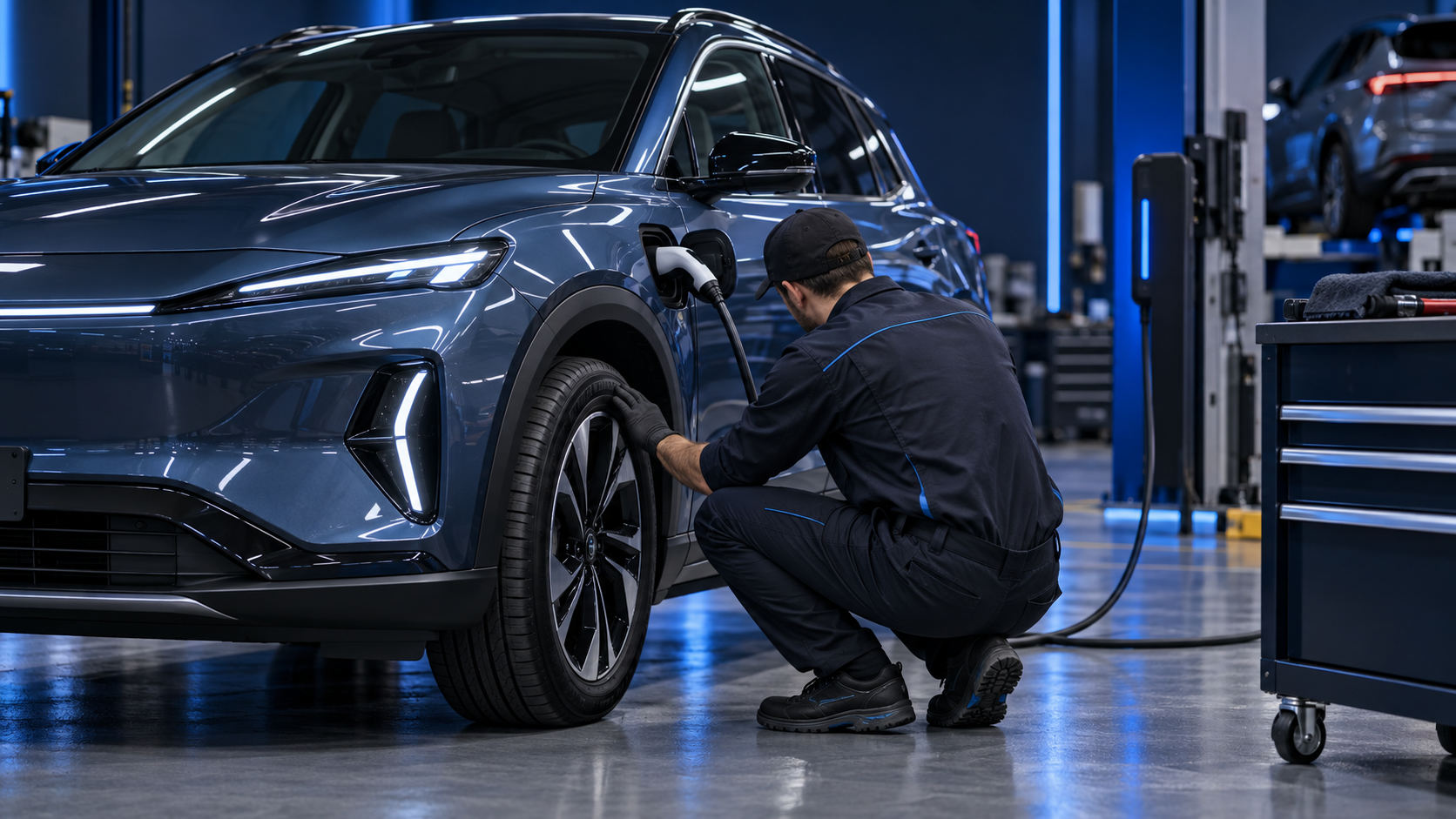
Battery-electric cars still need routine maintenance, even though they have no engine oil changes or exhaust system. Their schedule usually covers tires, brakes, cabin filters, coolant on some models, inspections, and software or recall work. The exact list depends on the vehicle, so use its manual and service notices rather than a generic interval chart.
Start with the manufacturer’s maintenance schedule
Find the maintenance section in the owner’s manual or the vehicle’s service app. Note the time or distance interval for inspections and consumable parts. Some checks are tied to calendar time even when the car is driven little. Keep receipts and digital service records, as these may be useful for warranty questions and future owners.
The U.S. Department of Energy’s Alternative Fuels Data Center explains that all-electric vehicles have fewer moving parts and fewer fluids to service than conventional vehicles. It also notes that the battery, motor, and associated electronics typically need little scheduled maintenance. That does not make every EV maintenance-free. Cooling circuits, brakes, tires, suspension, cabin filtration, and the 12-volt electrical system may still need attention.
Check tire condition and pressure
EVs can place different demands on tires because vehicle weight, torque, and wheel choices vary. Inspect the tread and sidewalls for damage and uneven wear, and measure pressure when the tires are cold. Use the specification on the vehicle’s placard, not the maximum number printed on the tire. Rotate tires only in the pattern and interval allowed by the manual; staggered sizes or directional tread can restrict rotation.
Listen for new vibration, humming, or a change in handling. These signs can come from tires, wheel bearings, or suspension parts. Arrange an inspection if the car pulls, shakes, or repeatedly loses tire pressure. Our tire pressure guide covers the basic gauge check.
Keep the brakes in working order
Regenerative braking can reduce use of friction brakes, but the brake pads, rotors, calipers, and fluid still matter. Infrequent friction-brake use can allow corrosion or sticking, depending on climate and vehicle design. Follow the inspection schedule and pay attention to a change in pedal feel, grinding, pulling, vibration, warning lights, or longer stopping distances. Ask a qualified EV technician to inspect the system when symptoms appear.
Some EVs use a special procedure or service mode for brake work. Never assume a conventional-car repair procedure applies. Do not work on high-voltage components or orange cables. Use a shop trained for the vehicle and tell them about any warning messages.
Check cabin filters and cooling guidance
The cabin air filter usually has a time or distance interval. Replace it according to the manual, especially if airflow drops or a persistent odor appears. Some EV batteries use liquid cooling. The DOE notes that these systems may require regular checks; the owner’s manual specifies whether the coolant should be inspected or serviced and who should do it. Do not open a sealed high-voltage cooling circuit or add a generic coolant.
Keep cooling-air openings clear of leaves and debris if the manual identifies an owner-cleanable intake. Do not spray water into vents or wash around electrical connections in a way the manufacturer does not permit. If the car displays a battery or thermal-management warning, follow its instructions and contact the service network.
Care for the 12-volt system and charging equipment
An EV’s 12-volt battery powers control systems and may prevent the car from starting when it fails. If the vehicle shows electrical resets, trouble unlocking, or a low-voltage warning, consult the manual or roadside service. Owners should not touch the high-voltage traction battery. For charging, inspect the cable and connector for visible damage, keep contacts clean and dry, and use equipment approved for the vehicle and region. Stop using a cable or outlet that is cracked, hot, or discolored.
Charging practices and battery-care recommendations vary. Follow the carmaker’s guidance for charge limits, storage, and long periods when the vehicle will not be used. The displayed range is an estimate that changes with temperature, speed, climate control, terrain, and driving style. A sudden unexpected range change or battery warning merits a service check.
Track recalls and warning messages
Check the manufacturer’s notices and the recall database for the country where the vehicle is registered. A software update may address a safety or performance issue. Do not ignore a high-voltage, battery-temperature, brake, or charging-system warning. Follow the on-screen instruction and arrange service where needed.
Routine care keeps an EV ready for daily travel, while diagnosis and high-voltage repair belong with trained technicians. See the DOE’s EV maintenance and safety overview and review the schedule for your exact model.
Leave a Reply