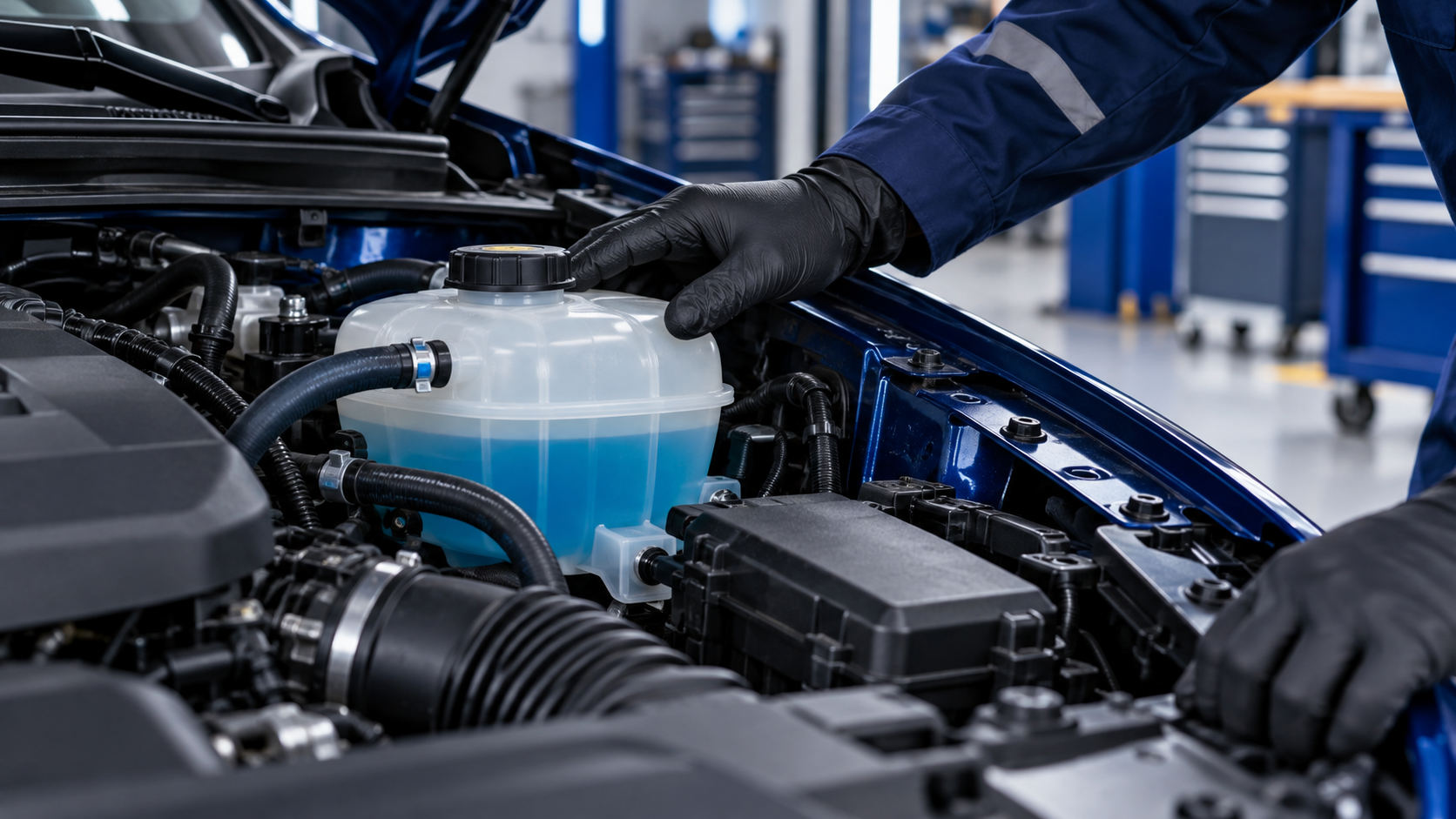
Engine coolant carries heat away from the engine and helps protect the cooling system. A low level or leak can lead to overheating and expensive damage. You can check the reservoir visually on many cars, but the system may be pressurized and extremely hot. The main safety rule is simple: inspect coolant only when the engine is fully cool, and never open a hot radiator or pressurized cap.
Find the right reservoir
Use the owner’s manual to locate the coolant expansion tank and identify its level marks. Many tanks are translucent, with MIN and MAX or COLD and FULL lines. Park on level ground, switch the engine off, and let it cool completely. Compare the coolant level with the cold mark. Do not mistake the windshield-washer reservoir for coolant; the cap and manual should identify the correct one.
If the reservoir is below its minimum mark, check the manual for the exact coolant specification and whether it is supplied premixed or must be diluted. Coolants can use different chemistries, even when their colors look alike. Do not mix products by color or top up with an arbitrary fluid. If the correct type is unclear, ask a dealer or qualified repair shop.
Never open a hot cooling system
Hot coolant can be under pressure and can cause severe burns. Do not remove a radiator cap or reservoir cap while the engine is hot, steaming, or recently overheated. Wait until the vehicle has cooled fully and follow the manual. Do not lean over the cap or squeeze hoses to test for pressure. If the temperature gauge rises into the danger zone or a temperature warning appears, pull over safely, switch off the engine, and follow the vehicle’s overheating instructions. Arrange roadside assistance if the warning persists or steam is visible.
Do not pour cold water onto a hot engine or continue driving to reach a workshop while the temperature is high. A cooling fan can start unexpectedly, and electric fans may operate even after the engine is switched off. Keep hands, clothing, and tools clear of fans and belts.
Look for signs of a leak
When the car is parked and cool, look under it for fresh puddles or dried residue near the reservoir, radiator, hoses, or water pump area. Coolant color varies, so do not identify a fluid by color alone. A sweet smell, repeated need to add coolant, a low-level warning, or an unexplained temperature rise also needs investigation. A leak may occur only when the system is hot, so the absence of a puddle does not rule it out.
Inspect only what is safely visible. Look for cracked or swollen hoses, damp connections, loose clamps, damaged reservoir seams, or crusted deposits. Do not reach between hot components or under a vehicle supported only by a jack. A mechanic can pressure-test the system and check for internal leaks that are not visible from outside.
Use the correct service interval
Coolant replacement intervals vary by vehicle, coolant chemistry, and service schedule. Some modern vehicles use long-life coolant, while others require more frequent replacement or special bleeding procedures. Follow the model-specific schedule rather than using a universal mileage interval. Keep a record of the product used and date of service, especially if a repair shop has drained or replaced coolant.
After a repair, air can remain in the cooling system if it is not filled and bled correctly. Some vehicles require a specific service mode, vacuum-filling equipment, or a set procedure. If the temperature fluctuates, the heater stops producing warm air, or the reservoir level drops again after service, contact the repairer promptly.
When a warning appears on the road
If the engine temperature warning appears, reduce load and pull over as soon as it is safe. Switch off the engine and keep people away from steam or hot fluid. Follow the manual for that warning. Do not open the hood if steam is escaping from the engine bay; wait until it is safe. Call for assistance if the warning does not clear after cooling, coolant is leaking, or the engine runs poorly.
AAA’s coolant guidance also stresses checking a reservoir with the engine cold and seeking help when coolant loss keeps recurring. For related under-hood checks, see our engine-oil guide.
Leave a Reply