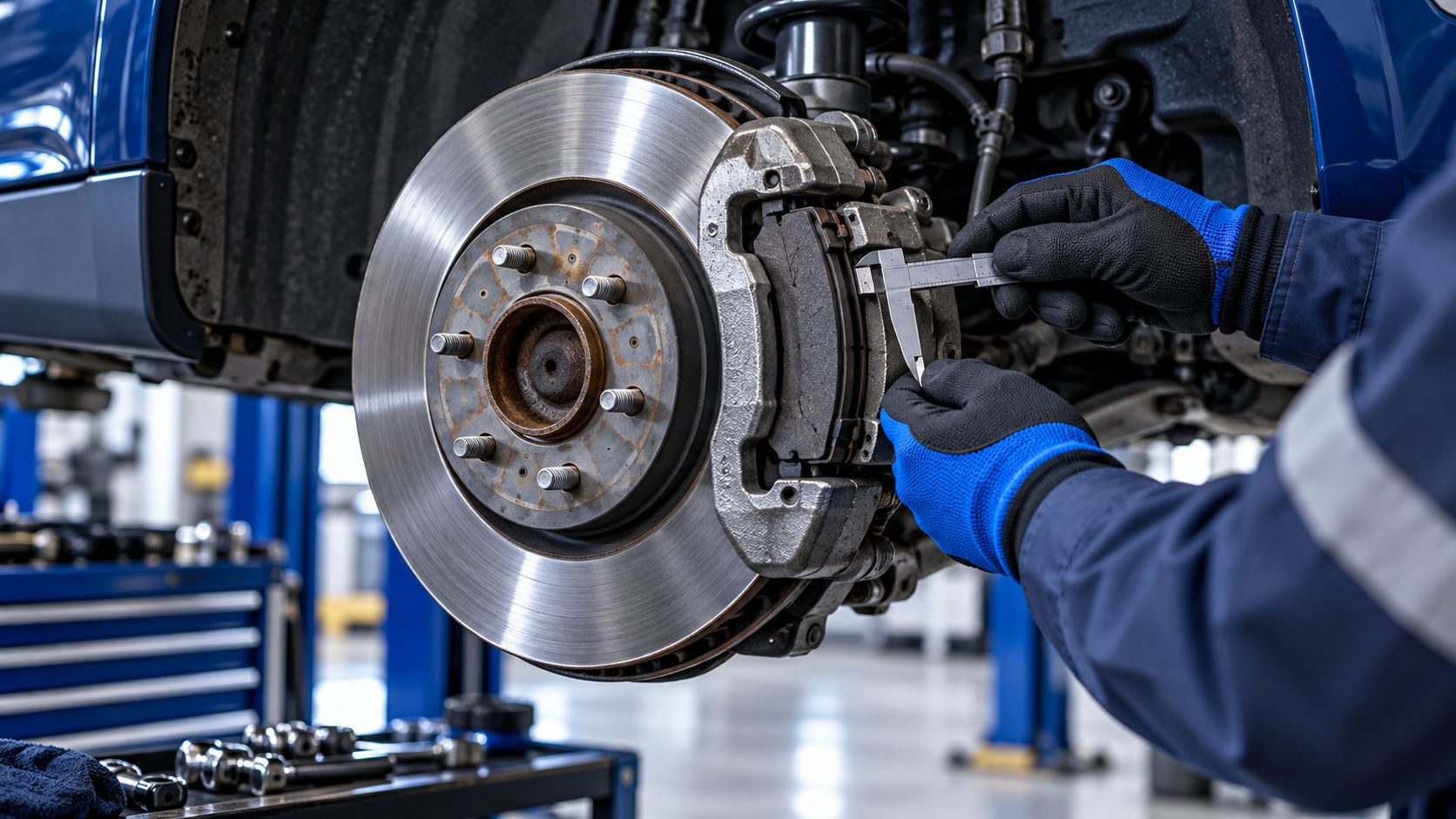
Brake wear develops over time, but changes in sound, pedal feel, or stopping behavior can signal a problem that needs prompt attention. A quick visual check can help you notice issues. It cannot measure the condition of every brake component, so rely on the inspection interval in the owner’s manual and have a technician examine any warning signs.
Notice changes while braking
Listen for persistent squealing, scraping, or grinding. Some pads use a small wear indicator that makes a squeal, while dirt or moisture can also make temporary noise. Grinding may mean friction material is depleted or another component is contacting the rotor. Have the brakes inspected rather than trying to diagnose the sound by ear alone.
Pay attention to a car that pulls to one side, a pedal that feels unusually soft or sinks, increased pedal travel, a pulsating pedal or steering wheel, or a longer stopping distance. These symptoms can have several causes, including worn pads, a sticking component, rotor issues, low fluid, or a tire problem. They all deserve a prompt inspection. If braking feels weak, the pedal drops toward the floor, or a brake warning appears with a change in behavior, stop in a safe location and arrange professional help. Do not continue driving to see if it improves.
Smoke, a strong burning smell, or one wheel becoming much hotter than the others can signal overheating or a fault. Pull over where safe, avoid touching wheels or brake parts, and let a professional assess the vehicle. Do not pour water on hot brakes. If there is smoke or a fire risk, move away from the vehicle and contact emergency services.
Check warning lights and fluid carefully
Read the manual for the meaning of brake, ABS, and stability-control warnings on your exact model. A brake warning light may relate to the parking brake, fluid level, or another system fault. The same symbol can behave differently across vehicles. If the light remains on after you have released the parking brake, follow the manual’s instructions and arrange an inspection.
Some vehicles have a translucent brake-fluid reservoir with level marks. Only check it as the manual directs. A falling level can accompany pad wear, but it can also indicate a leak. Do not simply top it up and ignore a repeated drop. Brake fluid absorbs moisture over time and must meet the required specification; opening a sealed system or using the wrong fluid can affect braking. Leave bleeding, line repair, and fluid replacement to someone with the right equipment and procedure.
Understand inspection and service intervals
Brake components wear at different rates according to driving style, terrain, vehicle load, traffic, and regenerative-braking use. The manual or maintenance schedule may call for inspection at specific services. Have pads, rotors or drums, hoses, calipers, parking-brake parts, and fluid checked as appropriate. Ask the shop to show the measured pad thickness and explain whether parts need replacement now or can be monitored.
Replacing pads on one side only can create uneven braking. Axle pairs are commonly serviced together, but the technician should follow the vehicle maker’s procedure. Rotors may be reusable if they meet thickness and condition limits. Replacing parts without checking measurements can waste money, while waiting too long can damage other components.
Electric and hybrid braking systems
Regenerative braking lets the motor slow a hybrid or electric vehicle and recover some energy. The friction brakes remain important for stronger stops and when regeneration is limited. The U.S. Department of Energy notes that regenerative braking can reduce brake wear in electric vehicles. Even so, have the system inspected on the schedule in the manual, especially if the car is used in wet or corrosive conditions or the brakes make unusual noises.
Do not work around high-voltage components or attempt brake service on an EV without training. Some vehicles require an electronic service mode before brake work. A qualified shop can follow the model-specific procedure and safely disable or manage the relevant systems.
What to tell the repair shop
- When the symptom began and whether it changes with speed, temperature, or rain.
- Whether the vehicle pulls, vibrates, makes noise, or has a warning light.
- Whether the pedal feels different from normal.
- Recent tire, suspension, or brake work and any fluid spots under the car.
Describe what you feel without guessing at the failed part. AAA’s overview of brake warning signs includes pulling, pedal changes, vibration, noise, and longer stopping. Follow your owner’s manual for intervals, then book an inspection when the vehicle’s behavior changes.
Leave a Reply