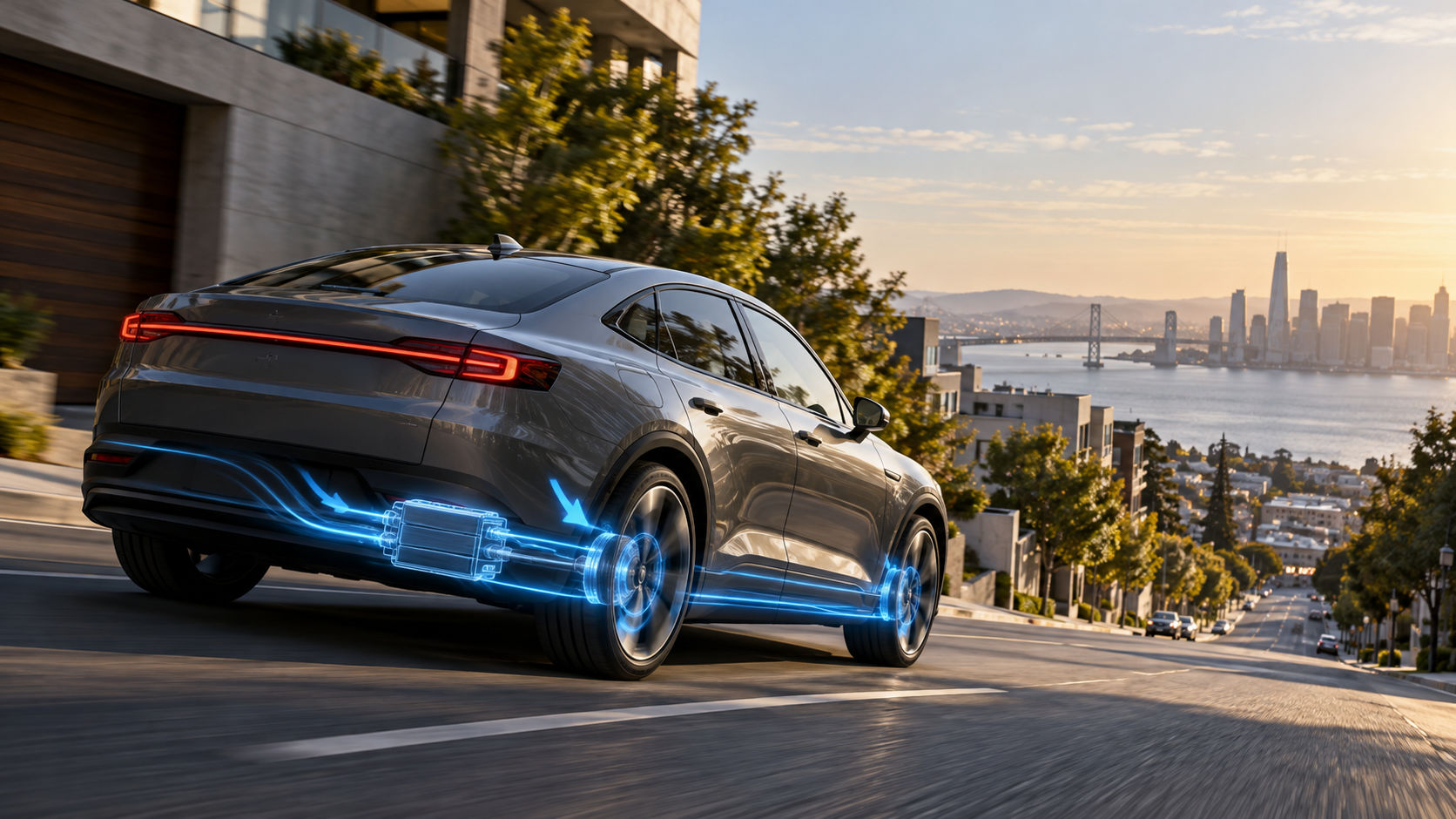
When an electric or hybrid car slows down, its drive motor can act as a generator. The wheels turn the motor, which converts some motion into electrical energy and sends it to the battery. That process also creates a braking force. Regenerative braking can reduce energy wasted as heat and may reduce friction-brake use, though it does not replace the conventional brakes.
What happens when you lift off the accelerator
In many vehicles, lifting your foot from the accelerator begins regenerative deceleration. Pressing the brake pedal may blend regeneration with friction braking. The car’s control system decides how much energy can be recovered while still delivering the requested slowing force. The feel differs by model and can be adjusted in drive settings.
Some vehicles have a one-pedal mode that can bring the car to a stop under ordinary conditions. Others use milder regeneration and require the driver to press the brake pedal to stop. Learn the behavior in the manual and practice in a clear, low-traffic place. The brake pedal remains the control for a firm or emergency stop.
Why energy recovery changes from trip to trip
Regeneration depends on how quickly the vehicle is slowing, the battery’s available capacity, temperature, traction, and the system’s limits. A battery near its maximum charge may accept less energy, so the car may provide less regenerative braking than usual. A very cold battery can also limit charging power. The vehicle may rely more on friction brakes in those situations.
Road grip matters. On slippery surfaces, abrupt deceleration can affect stability, so use smooth inputs and follow the vehicle’s winter driving guidance. On a long descent, regeneration may help control speed and recover some energy, but it has a limit. Select a suitable gear or mode and use the friction brakes as the manual directs. Do not coast downhill in neutral or switch off the vehicle.
Use the settings that suit the road
A higher regeneration setting can slow the car more as you lift off the accelerator. Some drivers like it in stop-and-go traffic; others prefer a lower setting that lets the car coast. There is no single setting for every route. On a highway, a lower setting may make it easier to maintain speed. In town, a stronger setting can reduce repeated brake-pedal use when traffic is moving slowly.
One-pedal modes do not remove the need to check brake lights or stopping distance. Some models illuminate the brake lamps based on deceleration, while the activation threshold varies. Follow the manufacturer’s explanation and leave enough room to stop. Keep your foot ready to use the brake pedal when traffic, pedestrians, or road conditions require it.
Friction brakes still need inspection
Because regeneration can handle part of routine slowing, friction brakes may be used less often. Pads, rotors, calipers, brake fluid, and parking-brake parts still need scheduled inspection. In wet or salty conditions, corrosion can develop on braking surfaces. A change in pedal feel, grinding, pulling, warning lights, or vibration deserves a professional check. The brakes article in our Maintenance section explains warning signs and inspection basics.
When a vehicle is fully stopped, use the normal parking brake or Park setting described in the manual. Do not rely on regenerative braking to hold a parked car. If the battery or braking system shows a warning, follow the on-screen instructions and seek service.
Drive smoothly to make regeneration useful
Look farther ahead, ease off the accelerator early, and let the car slow gradually when traffic allows. Smooth driving gives the system more opportunity to recover energy than late, hard braking. It also helps passengers and leaves the friction brakes available for stronger stops. Do not delay braking in the hope of recovering more energy; safe stopping takes priority.
The Department of Energy’s AFDC braking animation shows how the motor reverses into generator operation. For battery-electric vehicles, its EV technology overview explains how regeneration interacts with different driving modes. Your owner’s manual describes the controls and limits for your particular model.
Leave a Reply