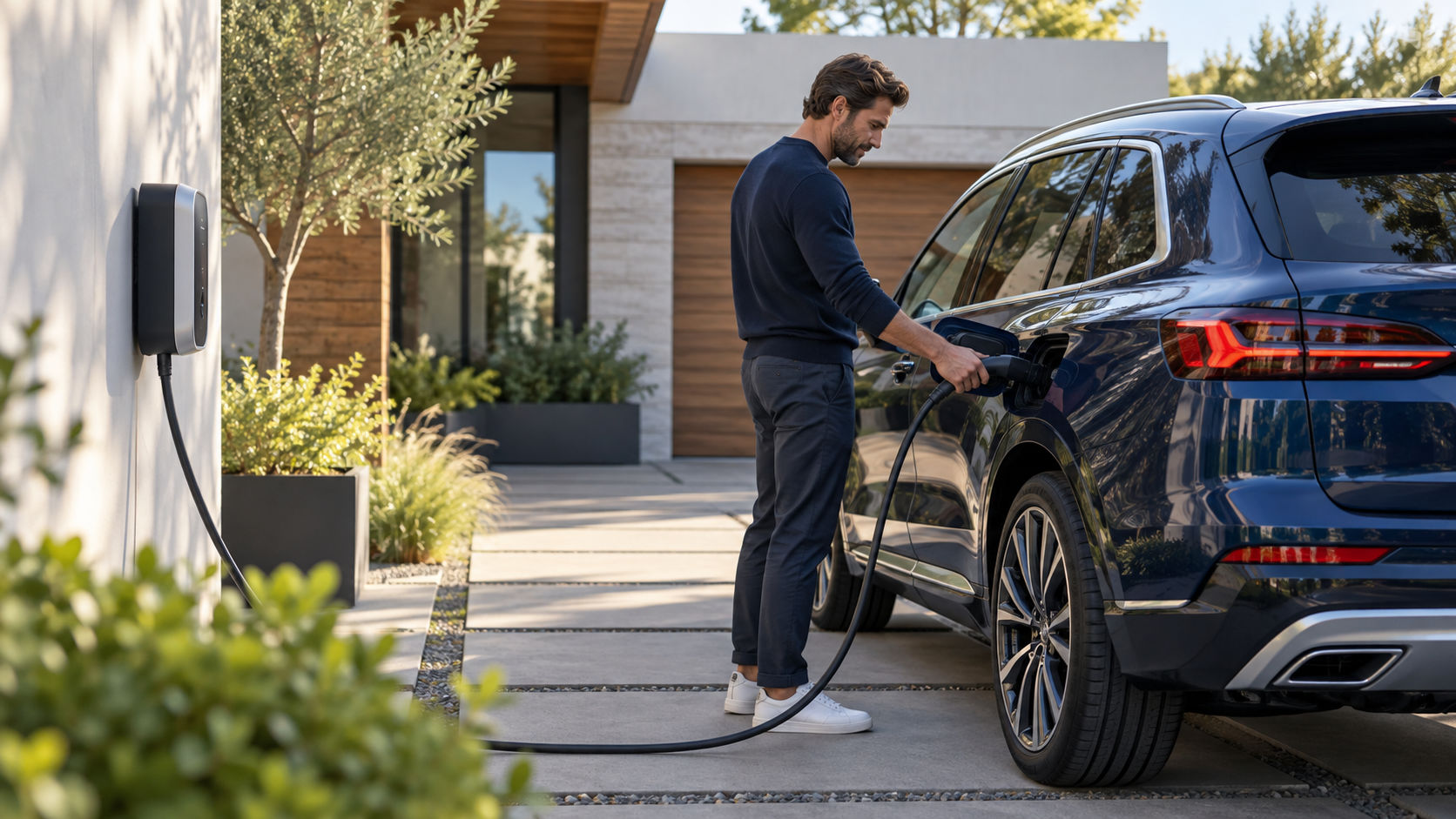
A plug-in hybrid can use grid electricity for some trips and fuel for longer drives. Its electric range depends on the model and conditions. Once the battery charge is used, the vehicle continues with its engine and hybrid system, though its fuel use may differ from the label estimate. The ownership routine works best when you charge regularly and maintain the car as a hybrid with an engine.
Know what your PHEV can do
Plug-in hybrids combine an electric motor and a larger battery with an internal-combustion engine. The battery can be charged from outside power, and regenerative braking can return some energy during deceleration. Depending on the design, the engine and motor may drive the wheels in different ways. Read the owner’s manual to understand the available drive modes, charge settings, and warning messages.
Use the vehicle’s EPA fuel economy and electric-range label for the exact model and trim, then compare it with your daily routes. Real-world electric distance changes with temperature, speed, hills, cabin heating or cooling, tires, and load. A commute that fits the official estimate in mild weather may use more energy in winter or on a fast highway.
Make charging part of the routine
If you have a safe home outlet or approved charging station, plug in after regular trips. A full charge gives the car the opportunity to run on electricity for part of the next drive. AFDC notes that a PHEV’s fuel use depends in part on how far it is driven between charges. If a driver rarely plugs in, the vehicle may operate much like a conventional hybrid while carrying the added mass of its larger battery.
Use the vehicle’s supplied or approved cordset and follow the manual’s instructions for outlet type, circuit requirements, storage, and weather. Do not use a loose or damaged receptacle. If home charging is not available, check whether workplace or public Level 2 charging fits your schedule. A public fast charger may not help: most PHEVs do not support DC fast charging. Verify the connector and charging capability for your exact vehicle before planning around a station.
Choose a drive mode for the trip
Many PHEVs offer modes that favor electric driving, hybrid operation, or holding some battery charge for later. Mode names and behavior differ. An electric-priority setting may suit a short local trip, while a hybrid mode can manage energy across a longer route. A charge-hold option may preserve battery energy for a low-emission zone or slower roads if the car supports it. Use the manual to learn when these modes are useful and whether the engine may start for heat, acceleration, battery protection, or other conditions.
Do not force a mode that leaves too little power for a hill, merge, or cold-weather journey. The vehicle manages its powertrain automatically, and a driver should keep enough fuel and follow any low-fuel or battery warnings. If an engine starts while the car is in an electric mode, check the manual for the reason before assuming it is a fault.
Remember the engine still needs service
A PHEV still has an engine, fuel system, exhaust, and related fluids. Follow the maintenance schedule for oil changes, filters, coolant, brake fluid, and inspections. Some cars track maintenance by time, mileage, or operating conditions. A low odometer reading does not cancel a time-based service reminder. Keep fuel and service records, and address warning lights promptly.
Regenerative braking can reduce friction-brake use, but pads, rotors, and brake fluid still need inspection. Have the system checked if you hear grinding, feel a change in pedal response, see a brake warning, or notice pulling or vibration. Routine tires and 12-volt battery care also apply. For more about braking behavior, read our regenerative braking guide.
Track the trips that determine your costs
For several weeks, record the distance driven, electricity added, fuel purchases, and charging cost. This shows how often your normal routes fit within the car’s electric capability and whether public charging adds enough convenience to justify its price. Compare your experience with the vehicle’s fuel-economy display, but remember that the display is an estimate and may combine electric and fuel use in a model-specific way.
AFDC’s plug-in hybrid overview explains how PHEVs use both a battery and another fuel source. Your vehicle manual provides the charging limits, maintenance interval, and mode behavior that apply to your specific car. For general charging choices, see our home charging guide.
Leave a Reply