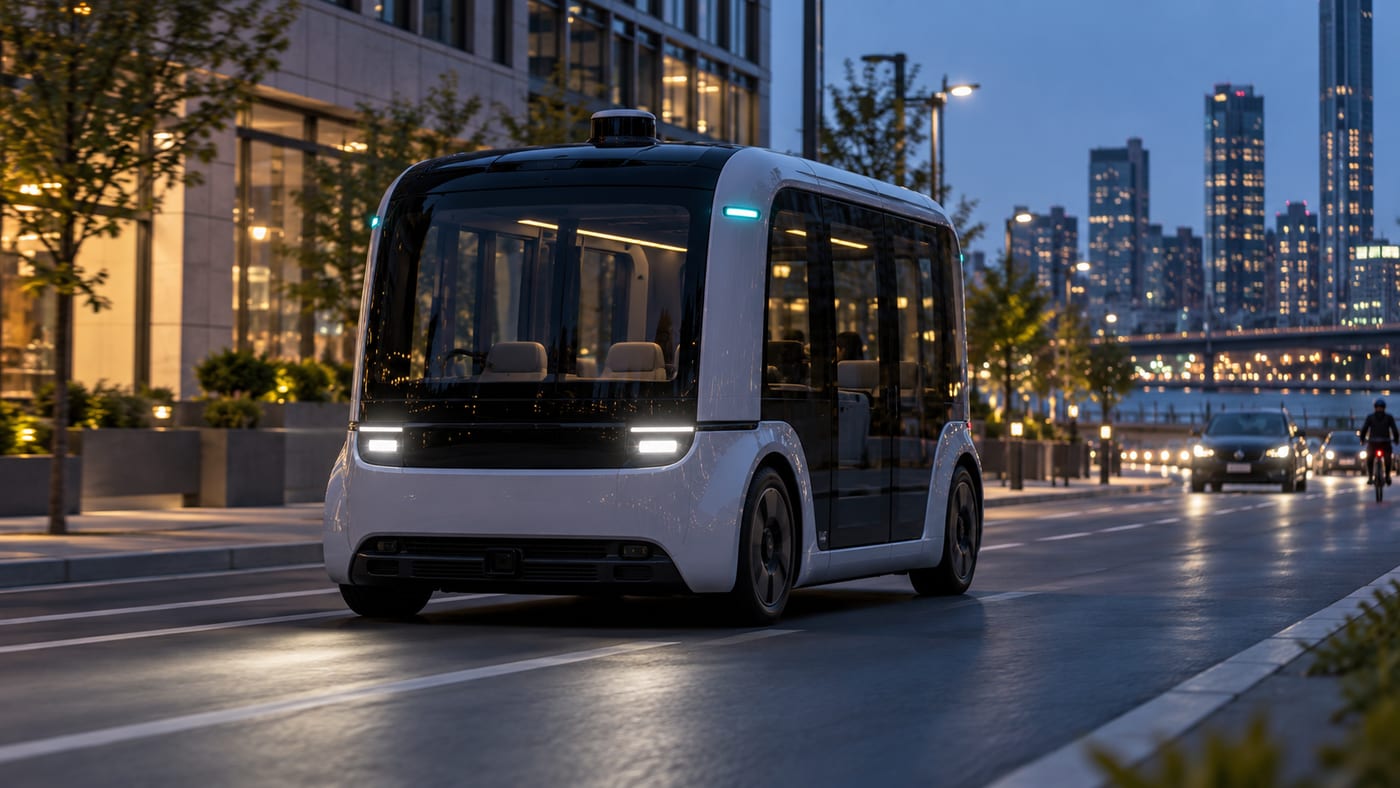
NHTSA has proposed changes to federal lighting requirements for vehicles designed to operate only with automated driving systems. The proposal, announced October 23, addresses how an automated vehicle signals its actions to other road users and how certain headlamps are tested.
Controls designed for a human driver
Federal lighting rules include requirements for turn-signal, hazard-warning, and beam-switching controls. NHTSA’s proposal would update those requirements for vehicles operated exclusively by an automated driving system. The agency says its aim is to account for designs without traditional manual controls while retaining defined safety requirements.
The proposal also describes optional marker lamps for vehicles when an automated driving system is operating. NHTSA would set specifications for the lamps’ cyan color, placement, activation, and visibility. A consistent signal could help law enforcement and other road users recognize that the vehicle is operating under automated control. The proposal does not make the lamps mandatory in every vehicle.
Headlamp testing and design
NHTSA also proposes changes to the test requirements for integral beam headlamps. The existing 12.8-volt test condition would be updated so manufacturers could certify performance at design voltages suited to longer-lasting LED and other advanced lighting systems. The proposal would remove rules that prescribe the vertical ordering of lower and upper headlamp beams, while leaving the applicable performance and illumination requirements in place.
These are proposed revisions to Federal Motor Vehicle Safety Standard No. 108. The agency has opened a 30-day public comment period after the notice’s Federal Register publication. Comments are associated with Docket No. NHTSA-2026-1519. NHTSA has said this proposal is separate from its negotiated rulemaking on other aspects of the lighting standard.
What the proposal means today
A proposal is not a final rule. Vehicle owners do not need to change how they use their current headlights because of this announcement. Existing requirements remain in place while NHTSA reviews public comments and decides whether to issue a final revision.
The proposal is part of a larger discussion about applying vehicle rules to designs that do not assume a human occupant will operate the controls. A rule written around a driver’s hands and visual cues may need a different test when the vehicle’s driving task is assigned to software. The regulator still has to specify what the vehicle must signal, when it must signal it, and how performance will be measured.
Questions still open
The public record will help determine whether the proposed marker lamp specifications are clear and useful in real conditions. Visibility can depend on daylight, weather, the vehicle’s position, and the distance from which a signal is observed. The proposal’s technical details and comments will shape the final decision. NHTSA has not said that every automated vehicle will use a cyan lamp, or that this design is already approved for all roads.
Auto Fieldbook will track the final rule and any implementation dates if NHTSA adopts the proposal. Our earlier report covers the agency’s broader review of vehicle-lighting standards. More reporting is available in the Auto News section.
Leave a Reply