A used electric car’s battery affects its usable range, charging behavior, and value. A quick drive and a dashboard range estimate cannot reveal its full condition, because the displayed range also reflects recent speed, weather, heating, tire pressure, and driving history. A careful purchase check combines vehicle records, a professional inspection, warranty details, and a realistic test drive.
Ask for the vehicle’s battery records
Request maintenance and repair records, including battery or charging-system warnings, software updates, collision repairs, and any work on the high-voltage system. Check the vehicle identification number against official recall records for the country where it is registered. Ask whether the battery has been replaced or repaired, and request documentation for the work and parts used.
Battery warranties differ by make, model year, market, and original terms. Read the actual warranty booklet for the car you are considering. Confirm the in-service date, mileage limit, minimum capacity coverage if offered, exclusions, and whether coverage transfers to a later owner. A sales listing’s phrase such as “battery warranty remaining” is not enough; verify eligibility with the manufacturer or authorized dealer using the VIN.
Request a qualified battery assessment
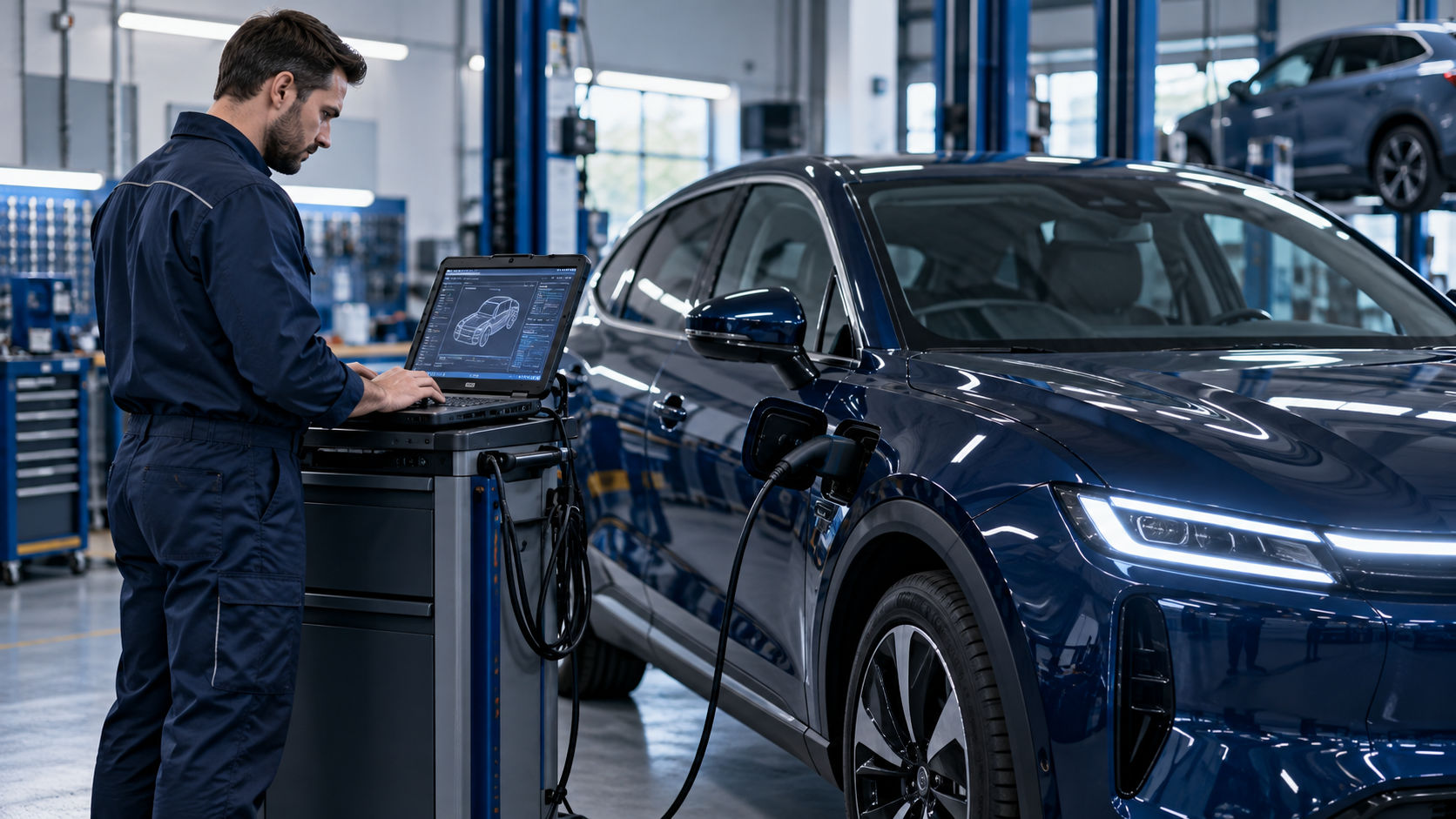
Ask a dealer or EV-qualified technician whether the vehicle supports a battery health report or diagnostic scan. The available measurements vary by manufacturer. A report may show estimated state of health, usable capacity, fault codes, cell or temperature differences, or charging history. There is no single consumer test that applies to every battery design, so ask what the reading means for that exact model and whether it was measured under the manufacturer’s procedure.
A dashboard’s remaining-range estimate is not a battery-health certificate. It changes with recent driving and environmental conditions. A seller may reset some trip information before a viewing, which can change the estimate without changing the battery. Compare more than one source of information and ask the technician to explain any warning or large deviation from the manufacturer’s published guidance.
Inspect the car and charging equipment
Look for evidence of damage to the underbody, battery enclosure, charge port, or high-voltage cables. Do not crawl under a vehicle without proper equipment or touch orange cables. A qualified shop can inspect impact damage, corrosion, leaks, and related systems safely. Confirm that the vehicle charges on both the AC connection and DC fast charging if those features are part of your intended use. A short test may not provide a full diagnosis, but a fault message, interrupted session, or unusually slow rate deserves investigation.
Check the portable cordset and any included adapters for cracks, heat marks, missing labels, or damaged pins. Confirm the car’s supported connectors and charging power in the manual. If the seller has a home charging unit or cable to include, verify its rating and installation documentation separately.
Take a test drive that reflects your use
Drive on roads similar to your regular commute. Watch the battery percentage and energy use over a meaningful distance, and note outside temperature, speed, heating, and terrain. A brief drive cannot precisely measure capacity, but it can reveal warning lights, rough power delivery, or unexpected changes in the range estimate. Try the cabin heat, climate controls, regenerative braking, and charging-port release.
Review tire condition and pressure as well. Uneven wear or low pressure can affect range and may point to alignment or suspension issues. On a cold day, ask whether battery preconditioning is available and how it affects charging. See our cold-weather EV guide for why a winter estimate can differ from a mild-weather one.
Compare ownership costs without guessing
Ask the manufacturer’s service department about model-specific maintenance, warranty, and battery diagnostics. Check local rules for inspection and registration. If the battery report is unavailable or unclear, include the cost of an independent EV inspection in your decision. A lower purchase price may not compensate for a fault that prevents regular charging or reduces the vehicle’s usable range for your needs.
The Department of Energy’s Alternative Fuels Data Center says EV batteries are designed for extended service but wear over time, and encourages buyers to check battery life and warranty information. Its EV maintenance and safety page provides background on battery care and related systems. Use that overview alongside the actual warranty and service information for the specific car.
Leave a Reply