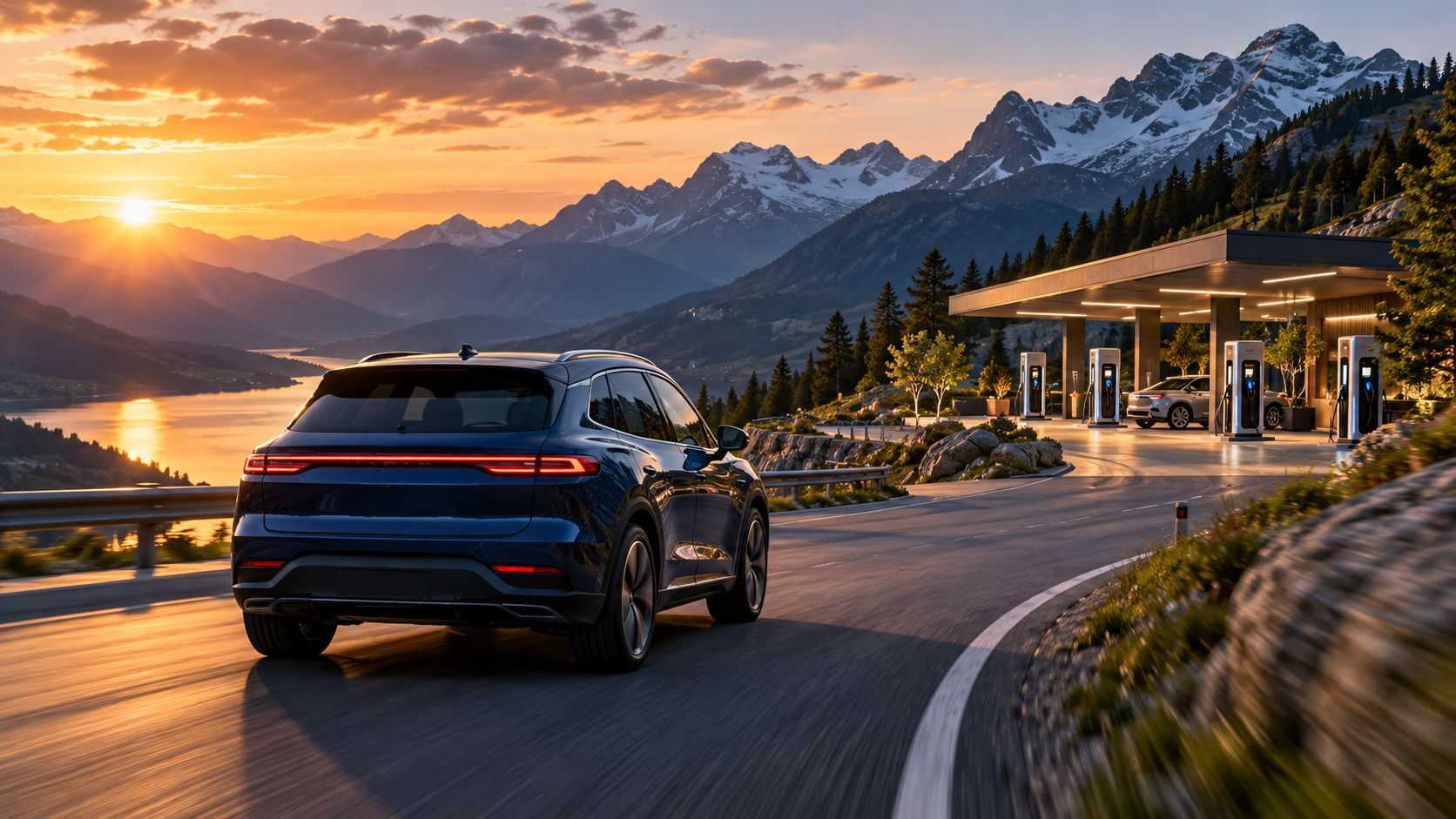
A comfortable electric-car road trip depends on matching each driving leg to the car’s real energy use and the chargers available along the way. The route planner’s estimate is a useful starting point, but wind, elevation, temperature, speed, cargo, and traffic can change how much charge remains when you arrive. Plan a reserve and keep a backup station in reach when the route has long gaps.
Start with the car and the route
Check the vehicle’s range estimate, supported connectors, maximum AC and DC charging rates, and any towing or roof-load effects in the manual. Enter the destination in the vehicle’s navigation system or a trusted EV route planner. Some systems account for elevation, weather, traffic, and charger performance, while others provide a simpler estimate. Compare the suggested route with a second source before relying on it in a remote area.
Look at the full journey rather than only the first charging stop. Identify compatible stations along the highway, their hours, network, and nearby alternatives. The U.S. Department of Energy’s AFDC Station Locator allows searches by location or route. Charging network apps and station maps can show different details, so confirm the charger type and status on more than one source if the stop is important.
Choose stops that leave room for delays
Do not plan to arrive with the battery nearly empty. Leave a margin for detours, colder temperatures, headwinds, traffic, road closures, or a station that is out of service. The appropriate buffer depends on the route, weather, and distance to the next charger. When chargers are sparse, preserve more reserve and identify a second option before leaving the last reliable stop.
If a route includes several fast-charging choices, the closest station is not always the best stop. Consider the car’s maximum charge rate, the station’s power, the battery temperature, and how much charge you need for the next leg. A station with many ports can offer more flexibility when demand is high, though availability can still change after you arrive.
Understand the charging time, not just the headline rate
Public DC fast chargers advertise a maximum power, but the car may accept less. The vehicle’s charging curve often changes as the battery fills, and many models slow down at higher charge levels. A cold or hot battery can also limit power. Some cars can precondition the battery when a fast charger is set as the navigation destination. If available, follow the manual’s instructions and allow time for the feature to work.
Plan stops around the charge needed for the next leg and the time you would already spend resting, eating, or using facilities. Recharging from a low level can be faster than waiting for a near-full battery. Do not unplug someone else’s car or block a charging bay while taking a longer break. Follow the station’s parking and idle-fee rules.
Prepare for network and connector differences
Check whether each stop accepts your vehicle’s connector and whether an approved adapter is needed. Install or sign in to the required network apps before departure, add an accepted payment method, and keep a contactless card or other backup if the charger supports it. Store the network’s support phone number or the station ID in an accessible place. A failed app connection is easier to resolve when you know the unit number and have another way to authorize a session.
At each stop, confirm the charger is in service, follow its start instructions, and verify that power is flowing. If a session fails repeatedly, move to a different unit or station and report the fault. Keep a backup route in your navigation app in case the preferred charger is unavailable.
Adjust the plan while driving
Watch the energy use and arrival estimate as conditions change. A strong headwind or a steep climb can reduce the projected charge; a slower road or tailwind may improve it. Lowering highway speed can reduce energy use, but drive at a safe and legal speed. Keep tire pressure at the vehicle’s recommended level and use the climate controls sensibly. Never turn off safety-critical systems to chase a range target.
Recheck the next charger before leaving a stop. If the station status is uncertain or the weather is worsening, choose a closer option while you still have enough charge to reach it. For winter travel, our cold-weather range guide covers preconditioning and seasonal energy use. For connector and session basics, see how to use public EV charging.
The AFDC station locator can help find chargers along a route. Charger availability, compatibility, access rules, and payment methods can change, so verify them close to departure and keep an alternate stop in the plan.
Leave a Reply