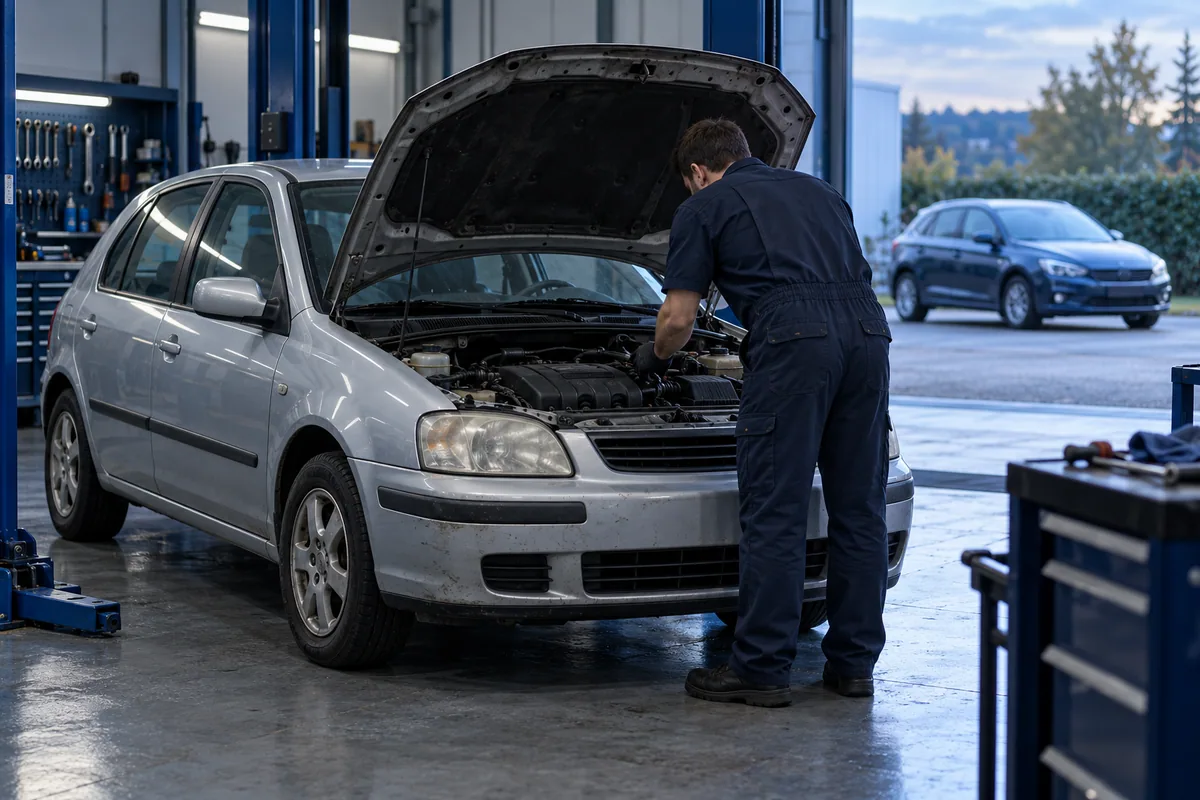
A major repair can make a car owner question whether it is time to move on. The choice is rarely settled by one estimate or a rule such as “never spend more than the car is worth.” A better decision compares the vehicle’s condition, expected costs, safety, reliability, and usefulness with the full cost and uncertainty of replacing it.
Start with the car’s current condition
Ask a qualified repair shop to diagnose the problem and provide a written estimate. If the proposed work is expensive or the diagnosis is uncertain, a second opinion may help. Ask the shop to separate repairs that affect safe operation from repairs that can be planned later. Get the reason for each recommendation and ask what symptoms would make the car unsafe to drive.
Look beyond the single repair. Review recent service records, recurring faults, tire and brake condition, corrosion or body damage, and any known warning lights. The owner’s manual can help you identify maintenance that is due. Keep completed invoices and estimates together in a vehicle file; our record-keeping guide explains what to save.
Compare the next year with the next several years
Separate the repair estimate from routine costs you will pay either way. For the car you own, list the immediate repair, likely scheduled service, insurance, energy, registration, and other local fees. For a replacement, include its purchase price, financing cost, insurance changes, registration or taxes, delivery or inspection fees, and any equipment you need. A higher monthly payment is not the only cost, and a repair bill does not tell you what the next year will require.
Use the same distance, ownership period, insurance coverage, and local fuel or electricity prices for both choices. Add only costs you can support with an estimate, policy quote, manual, or documented fee. Values and repair costs vary by market, condition, and location, so use a range when a figure is uncertain. Our annual ownership budget guide can help organize the comparison.
Check the loan and resale position
If you still owe money, request a current payoff amount from the lender. Compare it with credible offers or valuations for the car in its present condition. The difference affects how much cash you need if you sell or trade it. A dealer may offer to include negative equity in a new loan, but that increases the amount financed. Read the new contract carefully and compare the total payments and finance charge, not only the monthly payment.
Consider the likely sale value after a repair only when you have a realistic buyer offer or appraisal. Online valuation tools are estimates and may not reflect damage, service history, regional demand, or fees. Keep separate figures for private sale, trade-in, and dealer purchase where you have actual quotes. Do not subtract an imagined resale premium from your repair decision.
Include reliability and the way you use the car
A car that often interrupts work, school, caregiving, or long trips can cost time and create logistical pressure even when the repair estimate looks manageable. Think about how often the vehicle has been unavailable, whether the fault is understood, and whether the repair comes with a parts or labor warranty. Ask the repair shop what follow-up inspection it recommends.
Compare the replacement with your actual needs. Check passenger and cargo space, visibility, accessibility, expected annual distance, charging access if you are considering an EV, and the available safety equipment. A newer vehicle may add features, but it can also introduce higher insurance, payment, or setup costs. The right fit is the one that serves your regular trips within a cost and risk level you can manage.
Use a consistent decision worksheet
- Record the diagnosis, written repair estimate, and any second opinion.
- List costs for keeping the car over your chosen time period, including planned maintenance and a reasonable uncertainty range.
- Collect actual purchase, financing, insurance, registration, and trade-in or sale figures for a replacement.
- Compare the cars on the same annual distance, time period, and local energy assumptions.
- Note non-financial factors such as downtime, safety concerns, comfort, accessibility, and whether the replacement meets your needs.
- Choose the option you can support with the evidence and budget you have, then keep the quotes and records.
The worksheet is a decision aid, not a guarantee that one choice will be cheaper. A repair may resolve a known fault while leaving other aging parts unchanged. A replacement may reduce some repair uncertainty while adding loan and ownership costs. Record your assumptions so you can revisit them if a quote, repair diagnosis, or budget changes.
Do not postpone a safety concern
If the car has a serious brake, steering, tire, fuel leak, overheating, or restraint-system problem, follow the manual’s warning and do not drive it when the vehicle is unsafe. Arrange a tow or professional inspection as needed. A cost comparison comes after the immediate safety question. The FTC’s auto repair guidance recommends following the manufacturer’s maintenance schedule and asking repair shops to explain their recommendations.
Replacing a car can make sense when a repair is one part of a pattern of costly failures, when the vehicle no longer fits your needs, or when a safety issue cannot be resolved within a reasonable plan. Keeping it can make sense when the repair addresses a known problem and the rest of the car meets your needs. Use quotes and records to make the call; a universal repair-to-value ratio cannot account for your situation.
Leave a Reply